
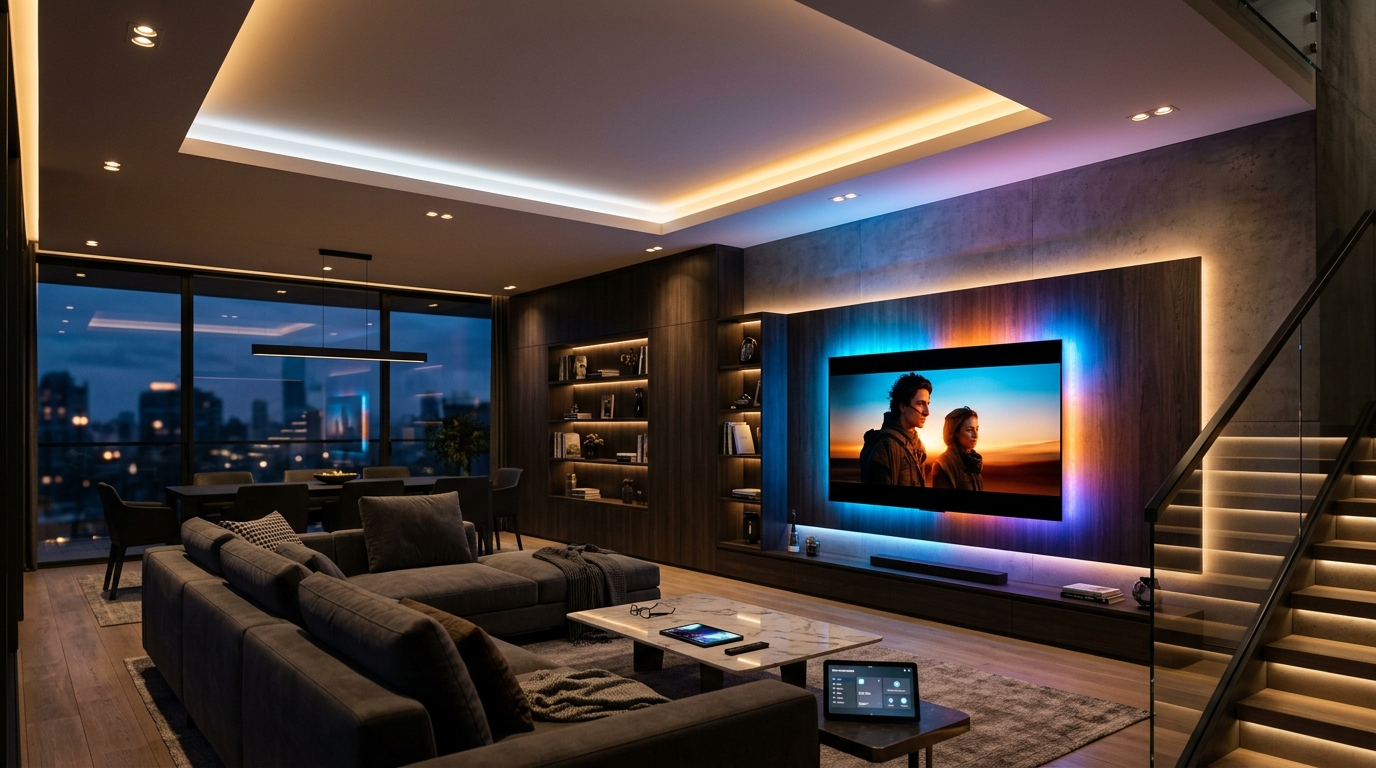
A luxury smart home is not defined by how many gadgets it has. It is defined by how little you notice the technology: lights that set themselves, curtains that close before the afternoon sun, and a house that still works perfectly ten years later. That only happens when the specification is written before the electrician starts.
This checklist is the luxury home automation specification we use for apartments, independent floors, villas and farmhouses across Gurgaon, Delhi and Noida. Use it with your architect and interior designer at the start of a project.
Step 1: Choose the backbone — wired, wireless or hybrid
Every other decision in a smart home plan follows from this one.
- Wired (KNX). A dedicated bus cable runs to every keypad, sensor and actuator. Best for new builds and full renovations. See how KNX wiring works.
- Wireless (Zigbee 3.0 or Matter). Devices talk over a mesh network with no new cables. Best for finished apartments. See how a Zigbee mesh works.
- Hybrid. A wired backbone for lighting, curtains and climate, with wireless devices added later. Most large luxury homes end up here.
If you are unsure which suits your home, our guide to smart home protocols compares them side by side.
Step 2: Put automation into the electrical drawings
This is where most luxury home automation projects in NCR lose money. Electrical drawings are made for ordinary switches and "adapted" later, leaving cramped panels and keypads in awkward places. Add these before work begins:
- A dedicated automation panel per floor, with at least 30% spare space for future expansion.
- Separate home runs for every lighting circuit you want to control on its own.
- Bus cable to every keypad, sensor and thermostat position, even where you have not chosen a device yet.
- A neutral wire at every switch position, so wireless devices can be added later without rewiring.
- Spare conduit to TV walls, ceilings and curtain pockets.
Cable is cheap. Opening a finished Italian-marble wall is not.
Step 3: Smart lighting — scenes, not switches
Lighting is the system you touch most, so it deserves the most care in a luxury smart home.
- One scene keypad per zone — Welcome, Dinner, Movie, Goodnight — instead of a row of six plastic switches.
- DALI-2 drivers for designer lighting, with smooth dimming down to 0.1%. Read DALI vs Zigbee smart lighting for the details.
- Tunable white in bedrooms and living areas, warm in the evening and cool in the morning.
- Presence sensors in wardrobes, staircases and powder rooms.
Step 4: Climate control for Delhi summers
Air conditioning is the largest load in an NCR home, and most luxury homes now use VRV or VRF systems.
- Integrate the VRV system through a gateway, so every indoor unit works from keypads, the app and scenes.
- Link motorised curtains to sun position, so west-facing rooms close their sheers before the afternoon heat.
- Add window contacts on balcony doors to pause the AC when a door is left open.
- Use PM2.5 and CO2 sensors to run purifiers and fresh-air units in the winter smog season.
Step 5: Motorised curtains and blinds
Decide on motorisation before the false ceiling is designed. Curtain pockets need the right depth, a power point and a control cable. Choose quiet motors, and agree which windows get both sheer and blackout tracks.
Step 6: Security and access control
- Video door phone at the main door and, for villas, at the gate, answered on wall screens and phones.
- Smart locks with fingerprint, PIN and app access, and a log of who entered when.
- IP cameras recording to a local recorder, not only to a foreign cloud.
- Leak sensors in kitchens, bathrooms and shafts, with motorised valves that shut off water automatically.
- Gas and smoke detection linked to alerts on every family member's phone.
Step 7: Treat the network as infrastructure
Every smart home system depends on the network. A single ISP router in a 6,000 sq ft home is not enough.
- Ceiling-mounted Wi-Fi access points, planned room by room for marble and concrete walls.
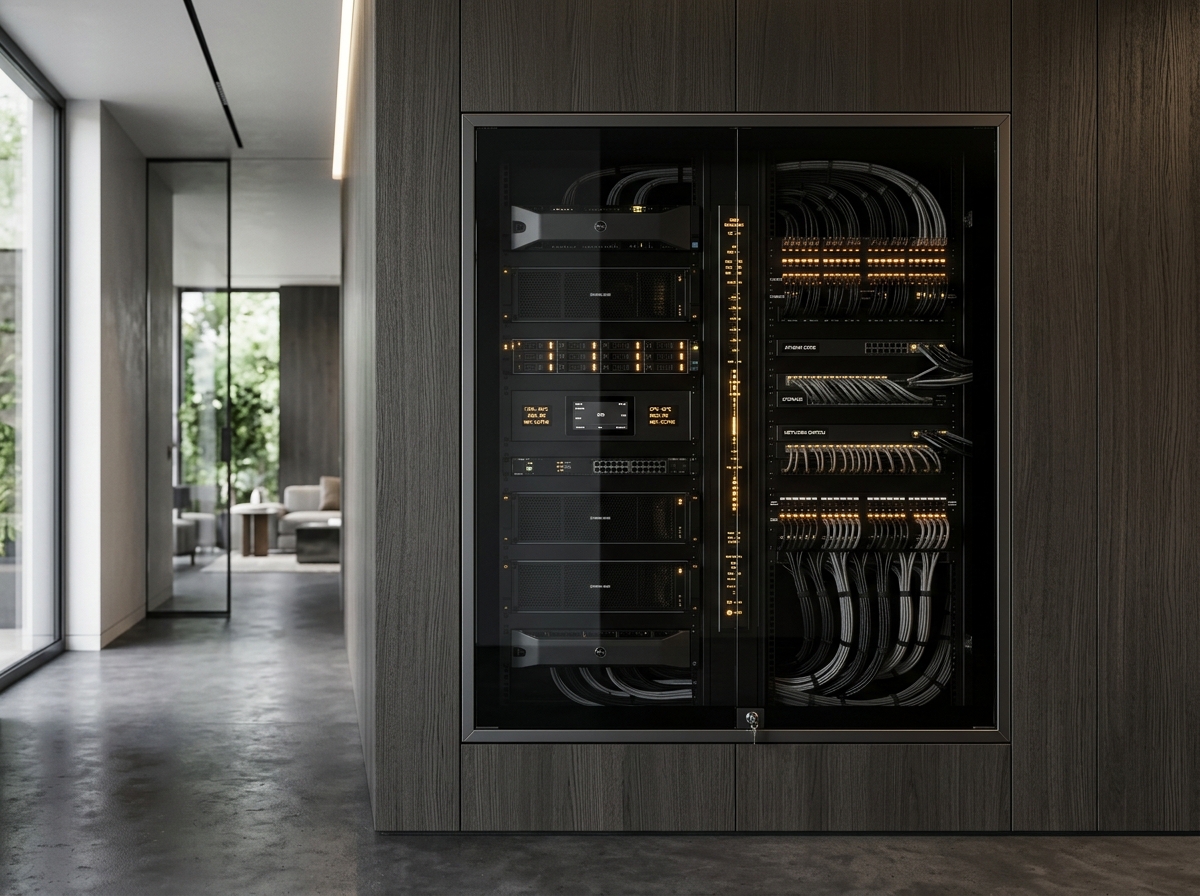
- PoE switches in a ventilated rack for cameras, access points and touch panels.
- Two internet connections with automatic failover, and a UPS for the rack and automation panel.
Step 8: Audio, video and home cinema
Plan multi-room audio with in-ceiling or invisible speakers in living, dining, master bedroom and terrace. If you want a dedicated cinema, fix the room, speaker positions and acoustic treatment before the false ceiling is closed.
Step 9: One simple interface
Guests should be able to use the keypads without a demonstration. Family members get one app, plus voice control through Alexa, Google Home or Siri if they want it.
Step 10: Handover and support
Before you sign with any home automation company, ask:
- Will we receive the full programming files and documentation?
- What is your response time for a fault in Gurgaon or Delhi?
- Are firmware updates and scene changes included in the first year?
Frequently asked questions
What is included in a luxury smart home?
Usually lighting control with scenes, climate control, motorised curtains, security and access, multi-room audio, and a reliable network, all controlled from keypads, an app and voice.
When should I start planning home automation?
Before the electrical drawings are finalised. For a new apartment that is usually several months before handover; for a renovation, at the same time as the architect and lighting designer.
Is wired or wireless better for a luxury home?
Wired is the long-term choice for anything that must never fail, such as lighting, curtains and climate. Wireless is the right choice when walls cannot be opened.
Can smart home automation be added to a finished apartment?
Yes. A wireless Zigbee or Matter system can automate lighting, curtains and AC without breaking walls.
Planning a luxury smart home in Gurgaon, Delhi or Noida? CLEUB designs, installs and supports luxury home automation across Delhi NCR. See our work in Gurgaon and Delhi, or book a consultation and we will review your drawings with you.