
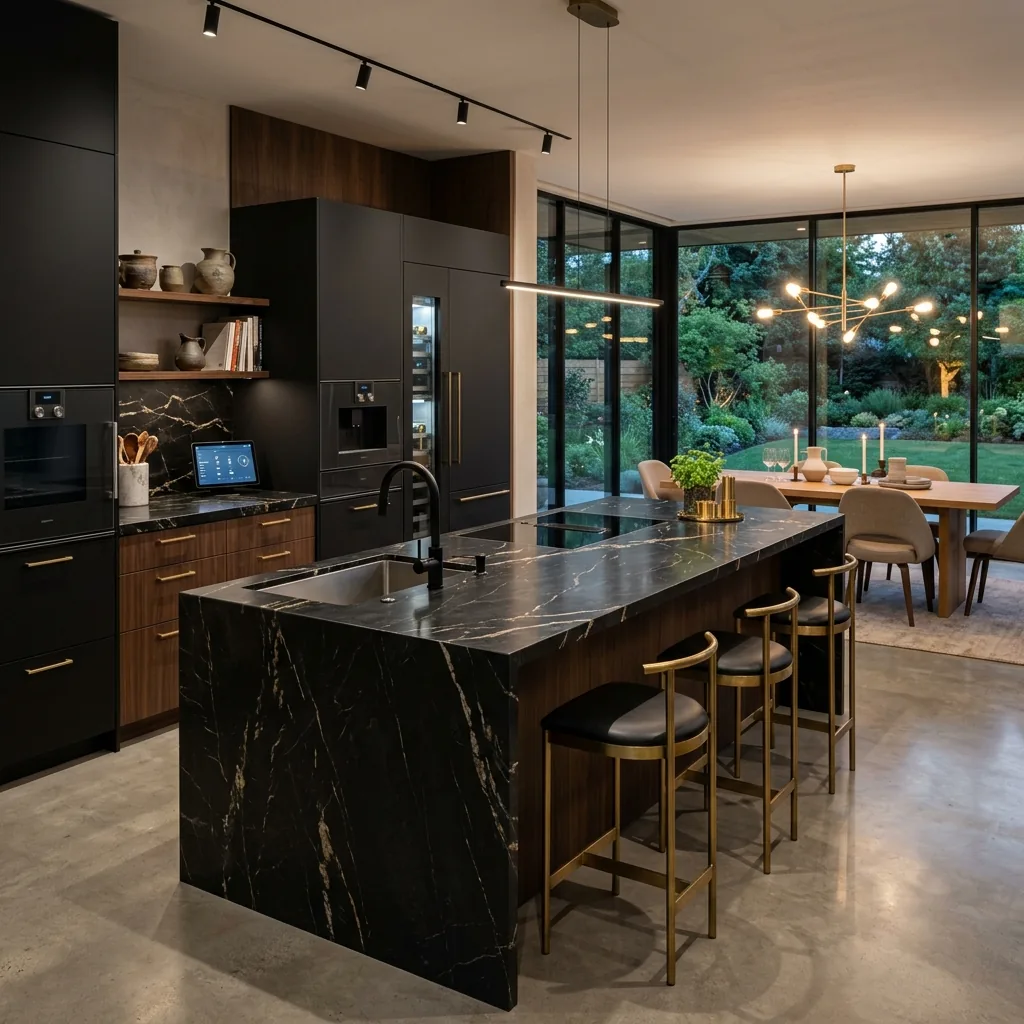
Smart kitchen automation in an Indian home is less about talking to your fridge and more about safety, convenience and peace of mind. Indian kitchens run hot and busy: piped or cylinder gas, heavy tadka cooking, an RO purifier, a geyser, often a cook or helper with their own schedule. The right automation makes all of that safer and simpler.
Here's what is worth automating, and how to plan it for a kitchen in Gurgaon, Delhi or Noida.
1. Gas safety comes first
A gas leak detector is the single most valuable device in an Indian kitchen.
- Gas sensor near the hob, placed according to the gas type: low down for LPG cylinders (LPG is heavier than air), high up for piped natural gas (PNG rises).
- Automatic shut-off: paired with a motorised valve on the gas line, the system closes the supply the moment a leak is detected.
- Alerts on every phone, so family members know even if they're out.
Use a heat detector rather than a smoke detector directly in the kitchen. Everyday cooking smoke sets off smoke detectors, and people end up disabling them.
2. Water leak protection
RO purifiers, dishwashers and sink plumbing are the most common sources of leaks, and they often go unnoticed until a cabinet or a marble floor is damaged.
- Leak sensors under the sink, behind the dishwasher and below the RO unit.
- A motorised valve on the kitchen water line that shuts off automatically.
- Overhead tank and pump control, common in Delhi builder floors, so the motor stops when the tank is full.
3. Chimney, exhaust and air quality
An air-quality sensor can switch the chimney or exhaust fan on automatically when smoke and fumes rise during cooking, and off again when the air clears. In winter smog season, the same sensor helps decide when to run purifiers instead of opening windows.
4. Appliance control
- Geyser and water heater: schedule them, or switch them on from your phone before you reach home. Use controllers rated for the geyser's load.
- Smart plugs for the coffee machine, kettle or slow cooker, with automatic switch-off timers.
- Fridge and freezer monitoring: a door sensor alerts you if the door is left open, and energy monitoring can flag a failing compressor.
- Everything-off scene: one button at the door switches off non-essential kitchen appliances when you leave.
See our appliance control solutions for what can be connected.
5. Lighting that works with your hands full
- Under-cabinet task lighting that turns on with motion, so you're never feeling for a switch with wet or oily hands.
- Bright "cooking" and soft "evening" scenes for open kitchens that join the dining area.
- Tunable white light, so food looks natural while cooking and the kitchen feels warm afterwards.
Our guide to DALI vs Zigbee smart lighting explains which suits your kitchen.
6. Access for cooks and helpers
Many NCR homes have a cook or helper who arrives at set times. A smart lock with separate PINs or fingerprints for each helper lets them in only during their hours, and the entry log shows who came and when, without handing out keys.
7. Voice help while cooking
Voice assistants are useful in a kitchen when your hands are busy: timers, measurements, shopping lists, or "turn on the chimney". Keep the smart speaker away from the hob and sink.
Planning a smart kitchen
- During a renovation, add a neutral wire at every switch, a power point for each sensor or valve, and space for the gas and water valves.
- In a finished kitchen, wireless Zigbee sensors, valves and switches can be added without breaking tiles. Read how a Zigbee mesh network works.
- Use one app for kitchen safety, lighting and the rest of the home, so alerts aren't lost across separate apps.
Frequently asked questions
What is the most important smart device for an Indian kitchen?
A gas leak detector linked to an automatic shut-off valve. It protects against the most serious kitchen risk and works even when nobody is home.
Where should a gas leak detector be placed?
Low down, near the floor, for LPG cylinders, because LPG is heavier than air; high up, near the ceiling, for piped natural gas (PNG), which rises. Keep it within a couple of metres of the hob, but not directly above it.
Should I put a smoke detector in the kitchen?
Use a heat detector instead. Normal cooking smoke triggers smoke detectors, which leads to people disabling them.
Can I automate my existing kitchen without breaking tiles?
Yes. Wireless sensors, smart plugs, valve controllers and switch modules can be added to a finished kitchen without wall work.
Planning a smart kitchen in Gurgaon, Delhi or Noida? CLEUB plans and installs kitchen safety and automation as part of a whole-home system. See our safety and security solutions, or book a consultation.